Research &
publications
Working papers, policy briefs and academic articles; support for early-career scholars and PhD researchers.
Created in 2025 and jointly coordinated by CEI-Iscte and CRIA-Iscte, OPal is a space for critical thinking, interdisciplinary collaboration and global knowledge exchange.
Our mission is to deepen understanding of Palestinian history, politics, culture, society and diaspora, connecting scholars, institutions and communities in Portugal, Europe and worldwide.
About OPal
The Observatory for Palestine Studies is the first initiative of its kind in Portugal and one of only three in Europe, alongside the European Centre for Palestine Studies at the University of Exeter and the Centre for Palestine Studies at SOAS.
Hosted at Iscte-IUL, the Observatory brings together researchers from diverse fields to advance interdisciplinary study of Palestine. It serves as a hub for academic exchange and public engagement, promoting critical debates and knowledge production.
Mission
To strengthen and expand Palestine Studies we aim to:
Support research on Palestinian history, politics, culture, society, diaspora and contemporary issues.
Work with universities and research centres worldwide on joint projects and knowledge exchange.
Raise the visibility of CEI-Iscte and CRIA-Iscte through academic and civic initiatives.
Involve policymakers, media, cultural institutions and civil society when relevant.
Activities
We contribute to scholarly and public dialogue through:
Working papers, policy briefs and academic articles; support for early-career scholars and PhD researchers.
International conferences, lectures, workshops and panels, in collaboration with cultural institutions, media and civil society.
Courses on Palestine and the SWANA region, university partnerships, and student and faculty exchanges.
FAQs
The Observatory for Palestine Studies is a research hub coordinated by CEI-Iscte and CRIA-Iscte. It is the first centre in Portugal dedicated to interdisciplinary Palestine Studies and one of only three in Europe.
The Observatory was established in 2025 in response to the growing need for academic research, public debate, and knowledge-building on Palestine—its history, society, politics, culture, and global connections.
Our work covers a wide range of topics, including:
Our initiatives are open to:
Yes. One of the main objectives of the Observatory is to work with universities, research centres, and cultural institutions worldwide to support joint research, academic mobility, and public events.
The Observatory develops new curricular units on Palestine Studies and the SWANA region. We also support conferences, workshops, summer schools, guest lectures, and student–faculty exchange programmes. For more information on this please contact/visit…
Students and early-career researchers can participate in research projects, events, and calls for papers. Opportunities are announced on our website and social media channels.
We collaborate with cultural institutions, museums, media, and civil society organisations. We promote public dialogue through exhibitions, film screenings, panel discussions, and outreach partnerships.
We publish policy briefs, analysis, and expert commentary to support informed debates. When relevant, we engage with decision-makers and public stakeholders.
You can follow our updates through:
No. The Observatory is an academic initiative. Its mission is to produce rigorous, evidence-based research and foster critical, multidisciplinary dialogue.
You can reach us through the contact information provided on our website or social media channels.
People
The OPal Scientific Committee is an interdisciplinary group of professors, researchers, and PhD students. We support the quality, ethical standards, and scientific integrity of research initiatives, events, and projects at OPal. OPal’s Scientific Committee consists of researchers from both CEI & CRIA.
Research interests: Middle East Politics with a focus on Palestine and Israel, Social Movements, Gender and Feminist Studies, Conflict Resolution, Settler Colonialism, Ethno-National Narratives
Research interests: Gender and Sexuality, Colonialism and Post-Colonialism, Same-Sex Marriage, Creolisation, Ethnic and Racial Identities and Discriminations, Portugal, Bahia/Brazil, Catalonia/Spain, Israel/Palestine
Research interests: Everyday Resistance, Empowerment, Humanitarianism, Gaza Strip, Participatory methodologies
Research interests: Family Kinship and relatedness, Gender, Emotions and Identity, Family, Grassroots Economies and Precarity, Care and Social Reproduction, Aging, Care and Self, Elites, Power and Hegemony
Research interests: Decolonial Feminisms/Epistemologies, Abolition and transformative Justice, Critical Dialogue, Collaborative Knowledge Production, Whiteness and Race, Settler Colonialism, Anti-imperialism, Trans/Internationalisms
Research interests: Settler-colonialism, Political Prisoners, Hunger Strikes, Necropolitics, Popular Movements, Middle-Eastern Studies
Research interests: Political Violence, Social Movements, Environment and Landscape, Memory/Heritage
Research interests: Settler Colonialism, Cybercolonialism, Hashtag Activism, (Everyday-) Digital Resistance, Cyberculture, Textile Art / Craft Studies, Digital Ethnography
The OPal Advisory Board is a group of internationally recognised experts on Palestine and human rights. They provide guidance, promote and evaluate OPal’s work, and ensure alignment with the interdisciplinary field of Palestine Studies.
is an international lawyer specialising in human rights and the Middle East, serving as the UN Special Rapporteur on the Occupied Palestinian Territories (oPt) since May 2022. She is an affiliate scholar at Georgetown University and the author of notable publications, including Palestinian Refugees in International Law. Her academic work focuses heavily on the Question of Palestine, the legal situation in Israel/Palestine, and Palestinian forced displacement, including the mandate of UNRWA. Additionally, she co-founded the Global Network on the Question of Palestine (GNQP) and has held roles with the OHCHR and UNRWA. As Special Rapporteur, she has published major reports addressing issues like the violation of self-determination, mass deprivation of liberty, and genocide in the oPt.
is professor of Contemporary Arab History at the University of São Paulo, Brazil, and her books include Marxism and Judaism, history of a difficult relationship (São Paulo: Boitempo); Palestine 48-08 (Tehran: DEFC); Edward Said: intellectual work and social critique (Org. São Paulo: Casa Amarela); Brazil and the Middle East: the Power of Civil Society (co-org./IRI-USP). She has translated several of Edward Said's articles and the book Freud and the Non-European into Portuguese. Her writings have appeared in English, Portuguese, Spanish, French, Italian, Arabic and Farsi. Arlene was the Brazilian civil society representative to the United Nations International Network for Palestine (UN-ICNP) from 2005 to 2015. Also the founder and director of the film festival Images from the East, together with the Iranian Documentary and Experimental Film Centre, and the Brazilian Institute for Arab Culture. She is currently part of the Board of Directors of the Common Action Forum, based in Madrid.
is Presidential Professor of Philosophy at City University of New York Graduate Center, and has worked on philosophical aspects of the question of Palestine, including refugee rights, the right of political self-determination, and the ethics of war. He also works in the philosophy of science and cognition, including categorization in the natural and social sciences, and the influence of language on thought. He serves on the Institute's Board of Trustees and is chair of the Research Committee. Khalidi is the editor of, Manifestations of Identity: The Lived Reality of Palestinian Refugees in Lebanon (IPS, 2010), and has published a number of articles in the Journal of Palestine Studies and Majallat al-Dirasat al-Filastiniyya.
is an Assistant Professor at the Department of Philosophy and Cultural studies, Birzeit University and the Director of the Ibrahim Abu Lughod Institute of International Studies. He is currently working on a research project that explores the global circulation of carceral practices, funded by the Arab Council for the Social Sciences (ACSS) and hosted by the Institute for Advanced Study in the Global South at Northwestern University in Qatar (IAS_NUQ). Basil’s research addresses the intersections of memory, resistance, and art by prisoners and others at the receiving end of violence. Basil has conducted research in several countries including Chile, Colombia, and Palestine.
is a Senior Lecturer and Program Director of the MA in Palestine Studies at the University of Exeter, building on previous academic roles at Birzeit University in Palestine. Moving beyond social psychology frameworks, Nadia’s research employs a settler-colonial lens to critique the "People-to-People" diplomacy initiatives of the Oslo II agreement. This analysis of power asymmetry and donor influence is the focus of the book Dialogue in Palestine: The People-to-People Diplomacy Programme and the Israeli-Palestinian Conflict (Bloomsbury, 2020). A former Visiting Scholar at Georgetown University, Nadia is committed to bringing non-western research and Arabic-language scholarship to English-speaking students. Nadia currently serves as a Trustee of the Council for British Research in the Levant (CBRL) and is a member of the intellectual committee of the Palestine Forum.
Publications
Recent journal articles and public commentary by members of OPal

Daniele, G. & Borralho, J. P. (2025)
Journal of Holy Land and Palestine Studies, 24(1), 73–97
Daniele, G. & Kelsch, S. M.
Journal of International and Intercultural Communication, 18(1), 1–20
Groten, A. (2025)
Journal of Palestine Studies, 54(3), 26–40
Tramel, S. F. & Groten, A.
The Journal of Peasant Studies, 52(7), 1692–1700

Vale de Almeida, M.
PÚBLICO, 7 June 2025
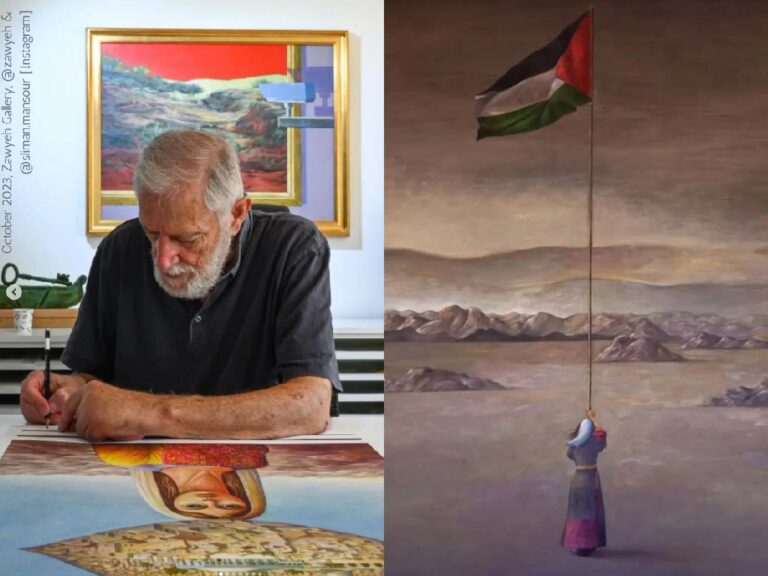
Celebrated artist Sliman Mansour, one of the founding figures of contemporary Palestinian art, has died at the age of 79 after a long illness, his family announced on Monday.
Read more →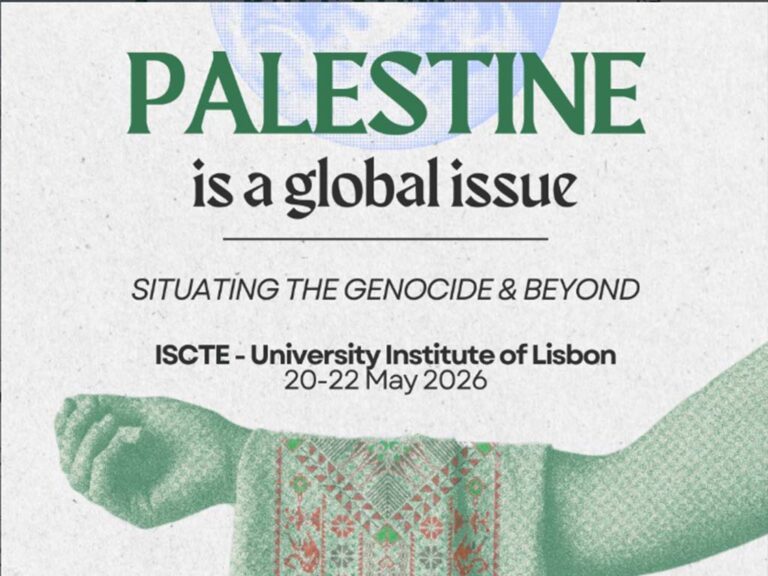
Lorem Ipsum is simply dummy text of the printing and typesetting industry. Lorem Ipsum has been the industry’s standard dummy text ever since 1966.
Read more →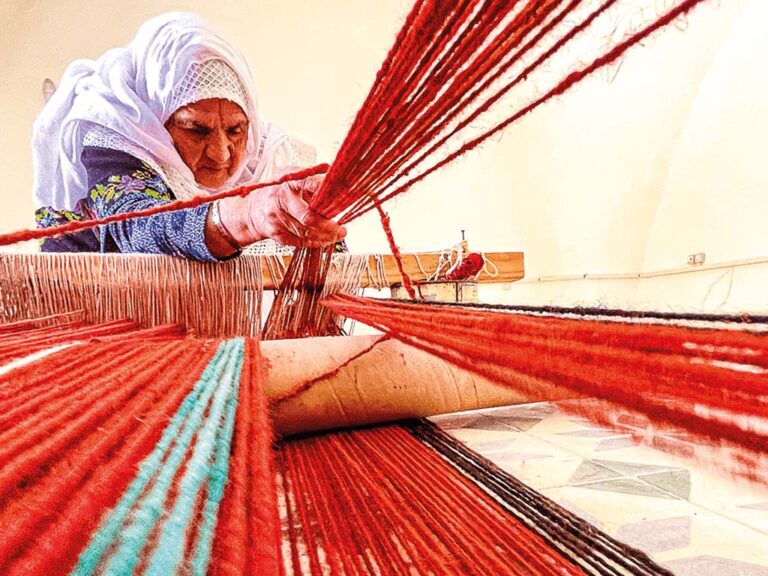
Lorem Ipsum is simply dummy text of the printing and typesetting industry. Lorem Ipsum has been the industry’s standard dummy text ever since 1966.
Read more →
Lorem Ipsum is simply dummy text of the printing and typesetting industry. Lorem Ipsum has been the industry’s standard dummy text ever since 1966.
Read more → In memory of Sliman Mansour 1947-2026
Celebrated artist Sliman Mansour, one of the founding figures of contemporary Palestinian art, has died at the age of 79 after a long illness, his family announced on Monday.
Read more → Confrence – Palestin is a global issue
Lorem Ipsum is simply dummy text of the printing and typesetting industry. Lorem Ipsum has been the industry’s standard dummy text ever since 1966.
Read more → Reselience trough art
Lorem Ipsum is simply dummy text of the printing and typesetting industry. Lorem Ipsum has been the industry’s standard dummy text ever since 1966.
Read more → Dispaced Histories of Palestine
Lorem Ipsum is simply dummy text of the printing and typesetting industry. Lorem Ipsum has been the industry’s standard dummy text ever since 1966.
Read more →Membership
OPal Associated Members are scholars, PhD students, artists, and journalists working on Palestine and who play an active role in raising awareness and in organising events or spaces relating to the Palestine question. OPal Student Members are BA and MA students enrolled both in Portugal and abroad who are studying Palestine and want to support the Observatory by attending or volunteering at our events.